
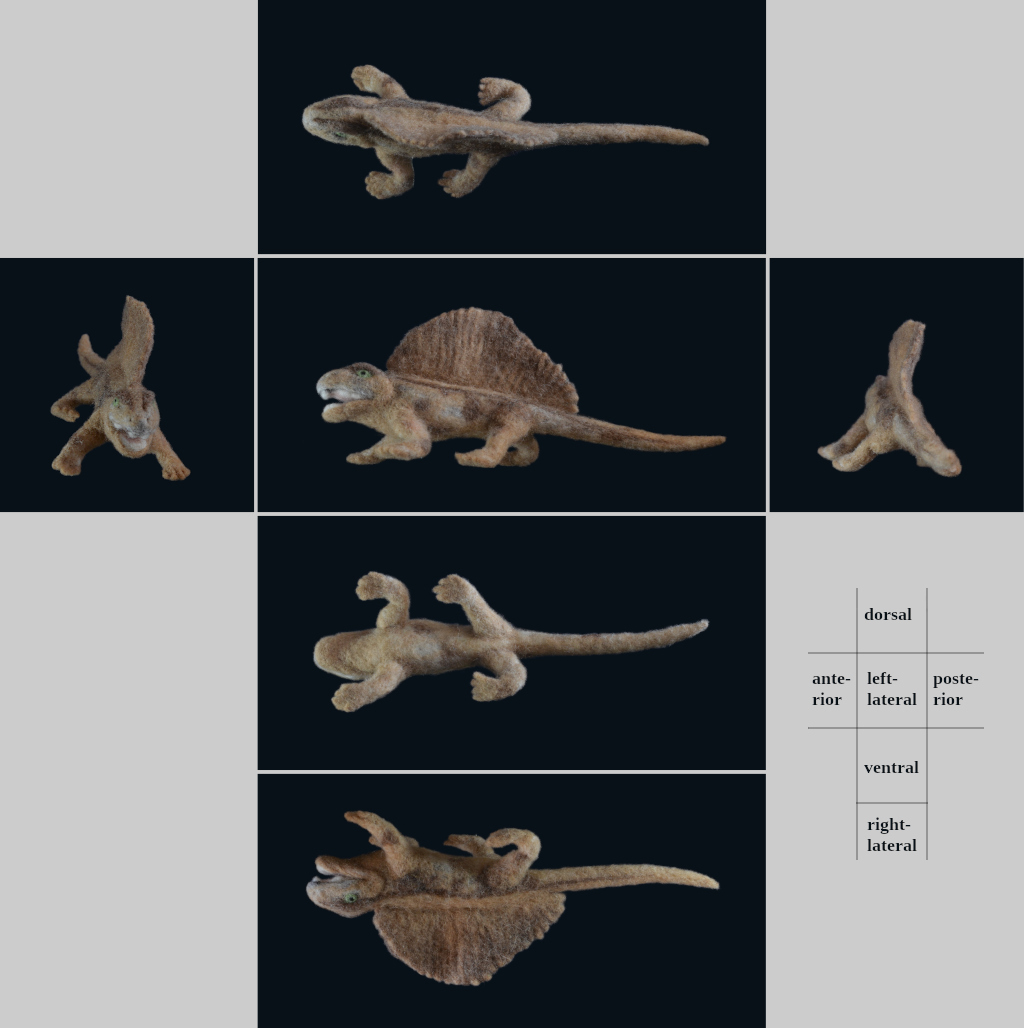
Dimetrodon milleri
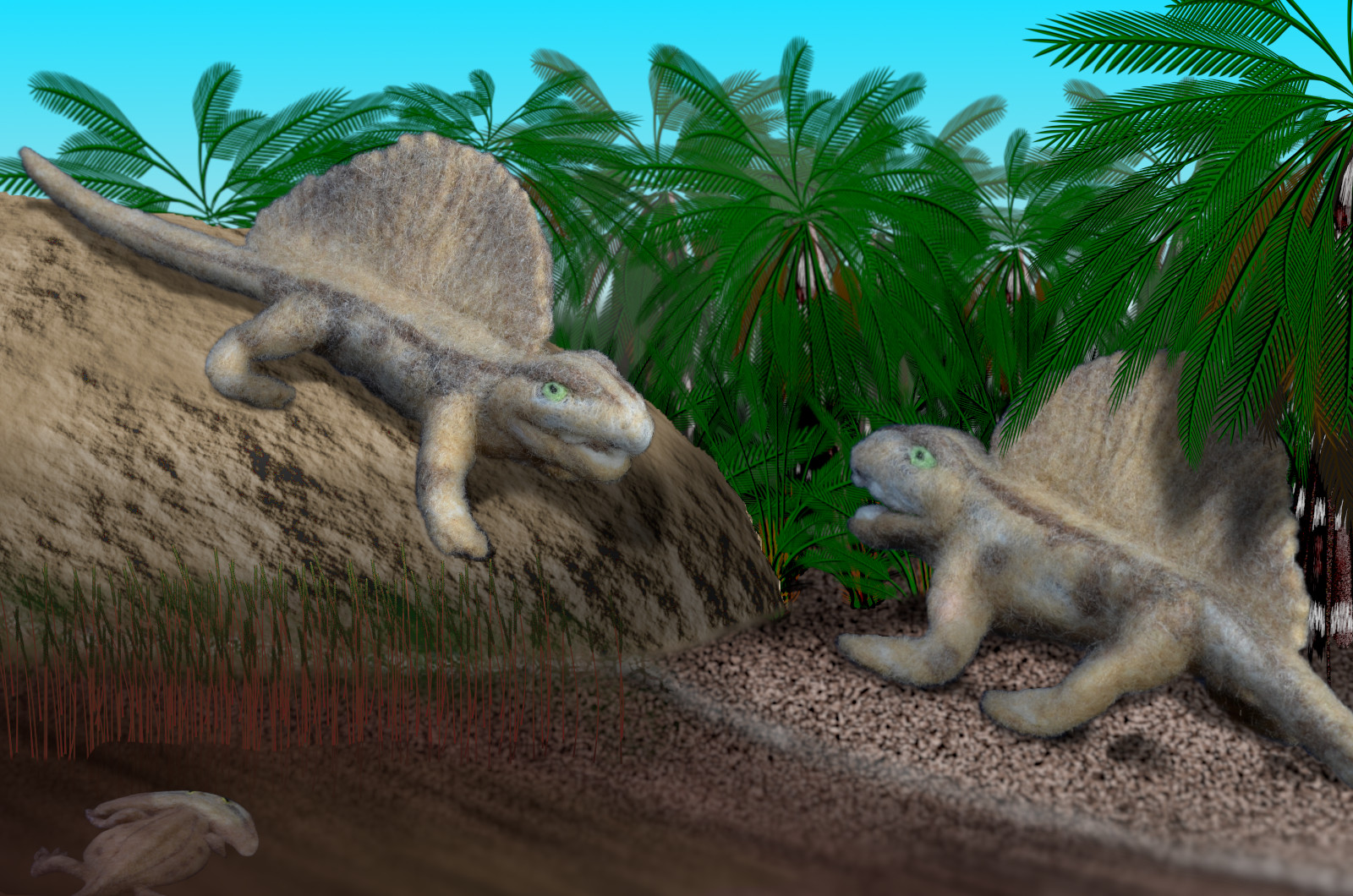
Dimetrodons are terrestrial tetrapod lived in the Permian, though their appearance resemble to the reptile, so that they are often mistaken for the dinasaurs, they are placed in the basal Synapsids include the mammals 3).
The generic name "Dimetrodon" means "two measures of teeth" 6), and the specific name is named in honor of Paul C. Miller who was a curator of the Walker Museum at the University of Chicago, and discovered many fossils of the Permian vertebrates 8).
Among the Dimetrodon, D. milleri was the early species, and the small species about 2 meters long. Later Dimetrodon evolved to larger sizes 6).
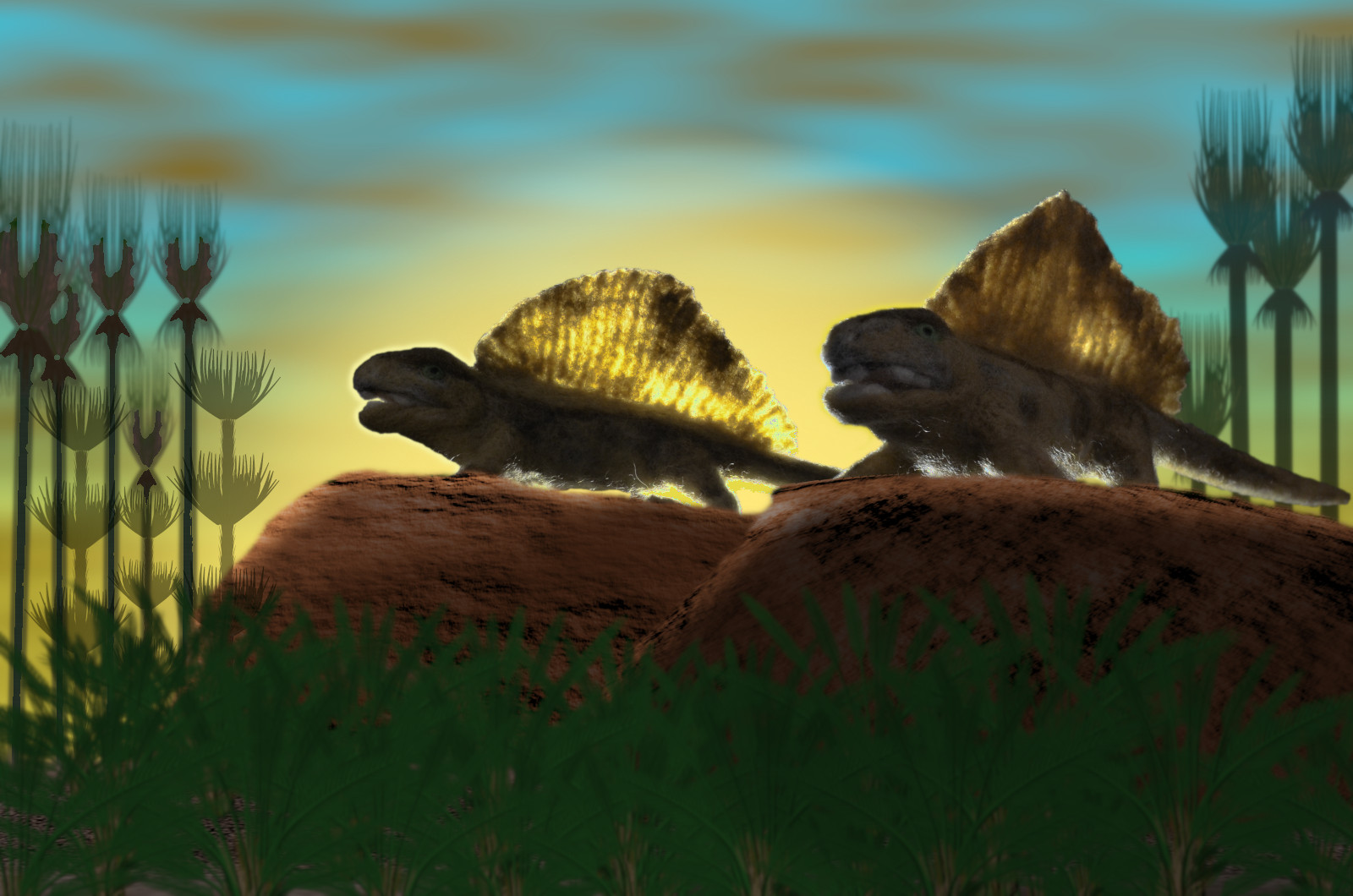
Dimetrodon especially is well-known for its large sail-like structure on its back, which is supported with extremely elongated neural spines 2). Some researchers believe that the sails had thermoregulation, while others believe they served as displays 2), and their exact function are still unkown.
Dimetrodon has numerous large and small conical teeth throughout the mouth, suggesting that it probably preyed on other vertebrates such as large amphiansan and was an apex predators among terresterial carnivore animals 6), 9).
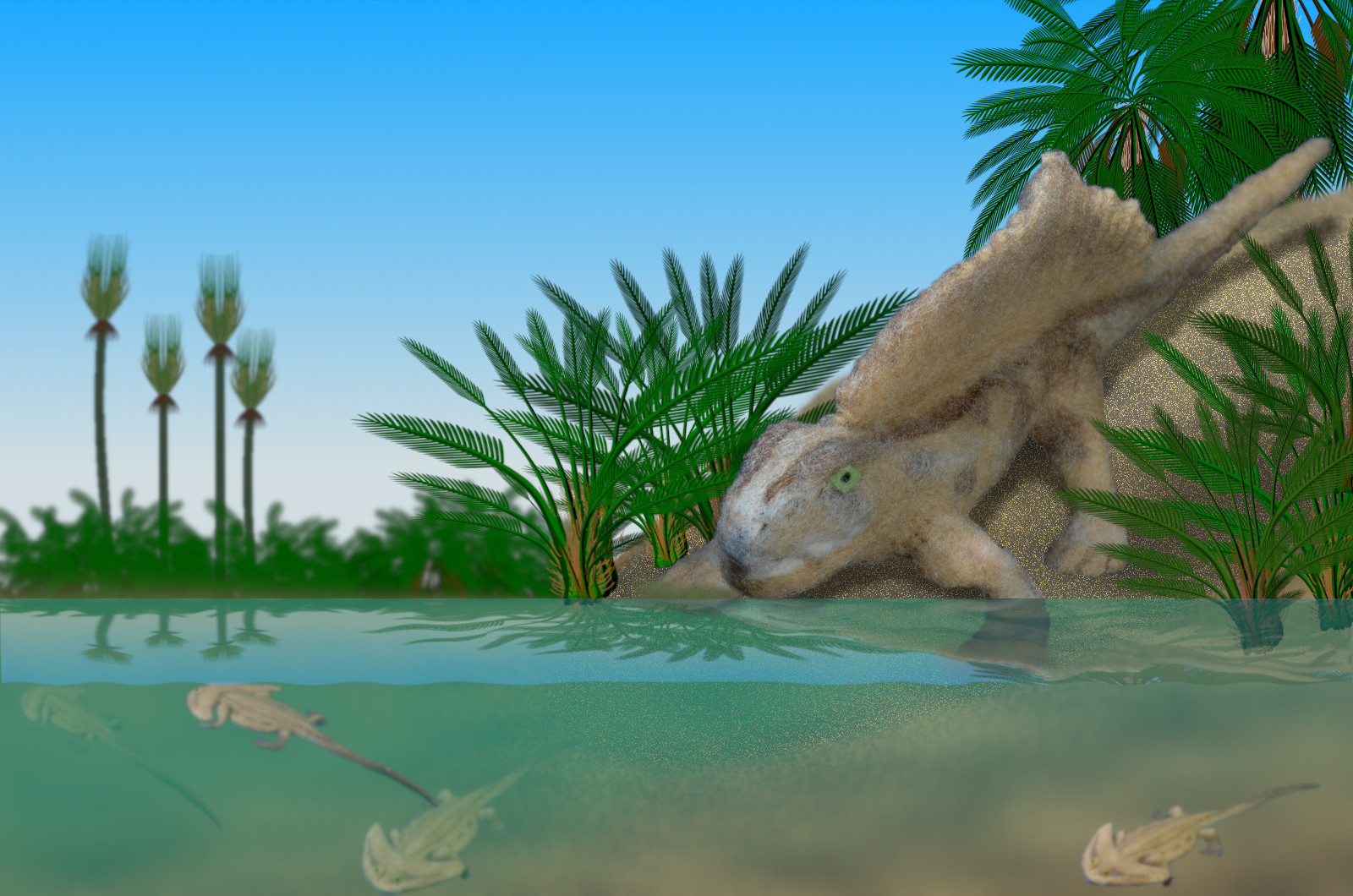
Although Dimetrodon was historically reconstructed with sprawling, belly-dragging posture, the results of skeletal and postural reanalysis suggests that it might have actually walked keeping its ventral surface off the ground with its legs in a more upright posture 1), 4)and may been an agile predator more than previously thought.
As many Dimetrodon fossils have been found in the seaway of Texas and Oklahoma, it is believed that they lived in an environments closely associated with water and fed on aquatic or semi-aquatic animals 7). But, they also have been found in the fully inland and upland, indicating that they were completely terresterial vertebrates and inhabited inland regions 7).
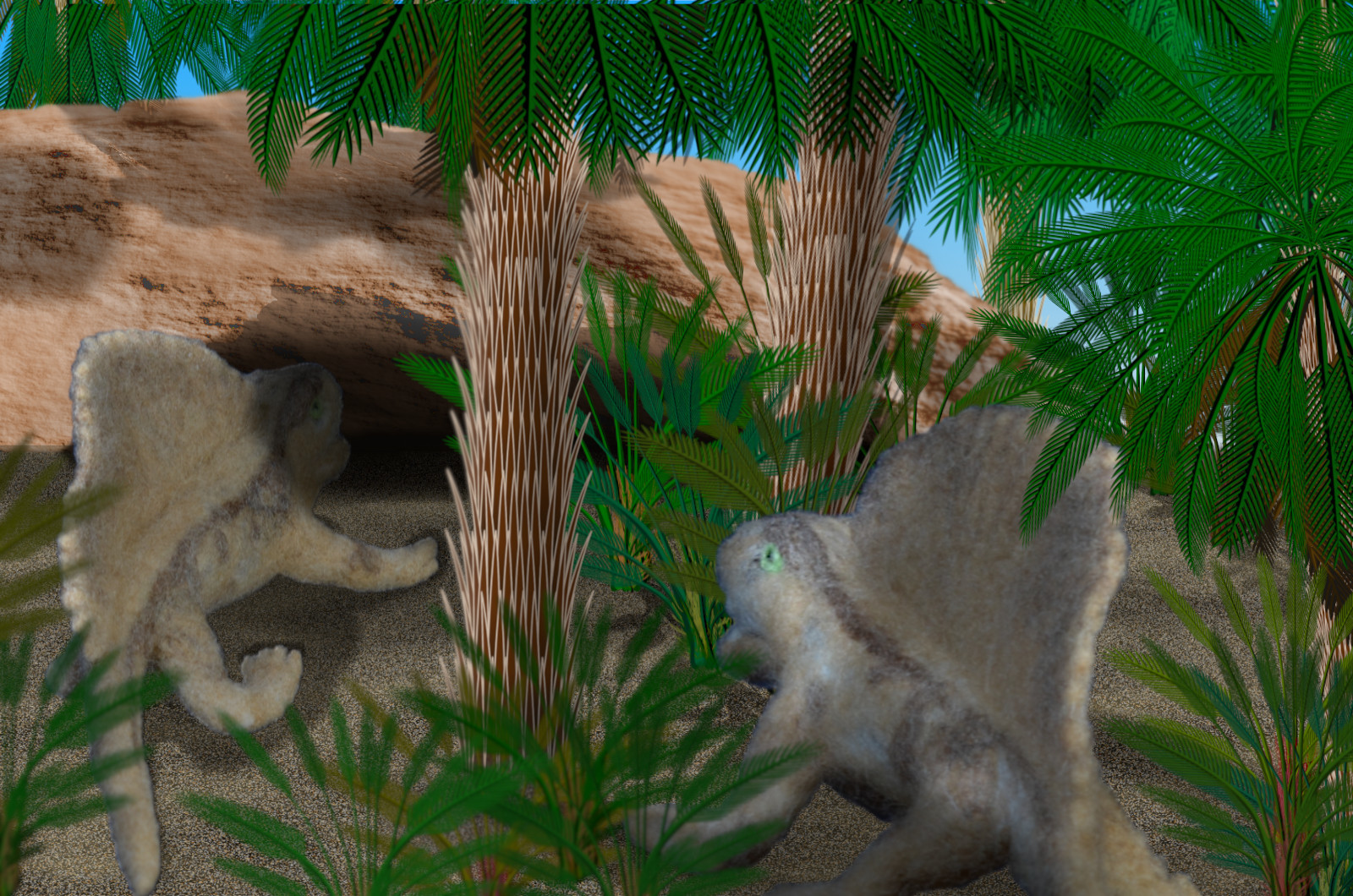
Dimetrodon are discoverd from North America and Europe, suggesting that the terrestrial tetrapods had distributed in the Eurameria continent at that time, without special limitations 5), 7).
Edaphosaurus, also the early synapsids, has a sail on their back, but each are evolved dependently, not inherited from a common ancestor, that is, the result of convergent evolution 3).
The illustrations of Late Paleozoic plant were referred to Gastaldo et al.(2024), Wang et al.(2012), and Sam Noble Museum (Oklahoma's Museum of Natural History) - Permian terrestrial communities -.
created in December 2023 - January 2026.
References:
- Abbott CP (2017) The Dimetrodon Dilemma: Reassessing Posture in Sphenacodonts GSA Annual Meeting in Seattle, Washington, USA - 2017. Paper No. 84-58. POSTER (DOI: 10.1130/abs/2017AM-307190.)
- Agliano A, Sander PM (2020) Bone histology and microanatomy of Edaphosaurus and Dimetrodon (Amniota, Synapsida) vertebrae from the Lower Permian of Texas Anatomical Record 304(3):570-583. (DOI: 10.1002/ar.24468.)
- Angielczyk KD (2009) Dimetrodon Is Not a Dinosaur: Using Tree Thinking to Understand the Ancient Relatives of Mammals and their Evolution Evolution: Education and Outreach 2(2): 257-271. (DOI: 10.1007/s12052-009-0117-4.)
- Barras C (2017) We’ve drawn iconic sail-wearing Dimetrodon wrong for 100 years New Scientist 13 Oct.
- Berman DS, Reisz RR, Martens T, Henrci AC (2001) A new species of Dimetrodon (Synapsida: Sphenacodontidae) from the Lower Permian of Germany records first occurrence of genus outside of North America. [abstract] Canadian Journal of Earth Sciences 38 (5): 803–812. (DOI:10.1139/e00-106.) (The full-text was referred to ResearchGate.)
- What's in a Name? Dimetrodon (Harvard Museum of Natural History) (accessed 2024.8.31)
- Lucas SG, Spielmann JA, Rinehart LF, Martens T (2009) Dimetrodon (amniota: synapsida: sphenacodontidae) from the lower permian Abo Formation, Socorro County, New Mexico. New Mexico Geological Society 60 th Annual Fall Field Conference Guidebook 438p. (DOI: 10.56577/FFC-60.)
- Romer AS (1937) New genera and species of pelycosaurian reptiles. Proceedings of the New England Zoological Club 16: 89–97.
- Introduction to the Pelycosaurs (UCMP, University of California Museum of Paleontology). (accessed 2024.08.31)